Palermo, nestled in the heart of Buenos Aires, is a sprawling district divided into unique sub-zones, each with its own identity. This district was one of my favorites, especially for its many beautiful gardens. I highly recommend taking a day to visit the neighborhoods of Palermo.
Palermo’s Green Heart
If you’re looking for a spot of serenity, go for it! Nestled in the heart of the district, it’s a real stop-off point in this lively city.


The Japanese Garden, born of goodwill between Argentina and Japan, is a pocket of serenity and Zen in a bustling city. The story of its creation, inspired by a visit from Japanese royalty in 1967 and realized ten years later, has imbued the garden with a sense of purpose and peace. Walking through its meticulously designed landscapes, I was transported to a world of tranquility, far from the noise and pace of urban life.
Info: Av. Casares 3450, C1425EWN C1425EWN, Buenos Aires, Argentine | Open daily from 10 a.m. to 6:30 p.m. | The price to enter the japanese garden is 150 ARS ( US$ 0.20)
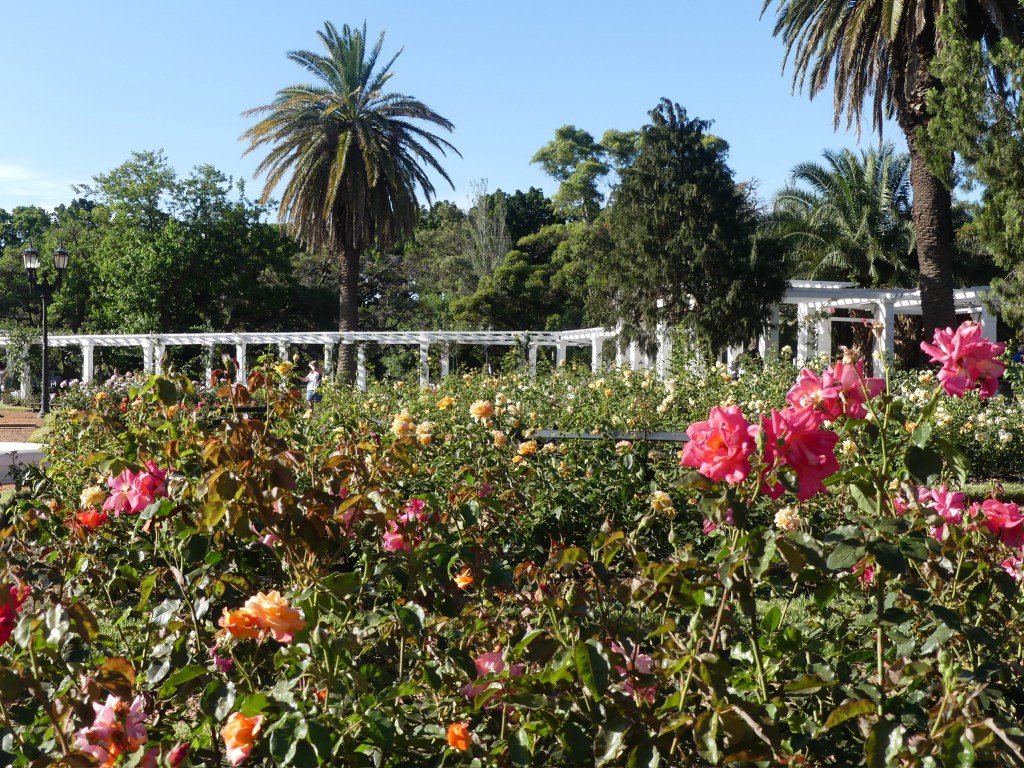
We then continued with a stroll along the Paseo de Rosedal. The explosion of color from over 18 000 roses, the poetic charm of the Poets’ Garden and the picturesque Andalusian patio were equally incredible.


The most common species are the bright red Sevillian rose, the Johan Strauss, the Charles Aznavour and the Frederic Mistral (all three in pink tones) and the light yellow Elina.
For its perfect beauty, the World Federation of Rose Societies (WFRS), in 2012, distinguished the Rose Garden with the Garden Excellence Award.
Info: Localisation | Free Entrance | Open Tuesday to Sunday, 10 a.m. to 6 p.m.. Closed on Mondays.
Plaza Italia: A Tribute to Heritage
The Plaza Italia is an important place in Buenos Aires, Argentina, located on the parcours of Santa Fe Avenue, in the neighborhood of Palermo.This square serves not just as a geographical marker but as a social and cultural gathering place, reflecting the diverse influences that have shaped Buenos Aires over the years.
The name Plaza Italia (the first foreign country to name a public space in Buenos Aires) will appear as a result of the installation of the monument to Giuseppe Garibaldi, a work of the Italian sculptor Eugenio Maccagnani (1852-1930), inaugurated on June 19, 1904.
Throughout the year, Plaza Italia plays host to various events, celebrations, and demonstrations, further solidifying its role as a communal space where Buenos Aires’ social and political life unfolds. It’s a place where people come together to celebrate shared histories and express collective hopes for the future.
P.S: Around plaza italia you’ll find one of Argentina’s popular cafés: Havana. I recommend you try the seed alfajores or the double dulce de leche – they’re the best!
Palermo Soho’s Street Art
Palermo Soho, nestled within the larger Palermo neighborhood of Buenos Aires, is a vibrant and eclectic district renowned for its bohemian flair and lively atmosphere. Named after the famous Soho districts in London and New York, Palermo Soho in Buenos Aires mirrors the trendy, avant-garde vibe of its namesakes, making it a favorite among locals and tourists alike.


One of the most striking features of Palermo Soho is its street art. The district’s walls are adorned with murals and graffiti that range from whimsical and colorful to politically charged and thought-provoking. These public artworks contribute to the neighborhood’s dynamic and artistic ambiance, turning the streets into an open-air gallery that reflects the cultural diversity and creative spirit of Buenos Aires.


Come and lose yourself in this charming neighborhood!




 m'digital nomad
Leave a comment